

Catnic, a major UK manufacturer of steel construction products, partnered with Innovate UK’s Innovation Exchange (iX) to explore sustainable alternatives to fossil-fuel-derived EPS insulation used in its lintels.
Background
Catnic, a leading UK manufacturer of steel construction products, sought to reduce reliance on fossil‑fuel‑derived expanded polystyrene (EPS) insulation in its steel lintels. To progress towards more sustainable alternatives, the company turned to Innovate UK’s Innovation Exchange (iX) to identify novel, low‑carbon insulation materials capable of:
- Matching or improving current thermal performance
- Withstanding compressive and tensile loads
- Integrating seamlessly into lintel manufacturing
- Offering a pathway toward scalable commercialisation
The challenge invited innovators to propose next‑generation materials that could support Catnic’s ambitions for greener, high‑performance lintels.
Solution
Through the iX challenge, Catnic engaged a diverse pool of solution providers, interviewing six companies to pitch their solutions, and ultimately selecting two SMEs ‑ Opovate and Tattva ‑ for prototype trials and structural testing.
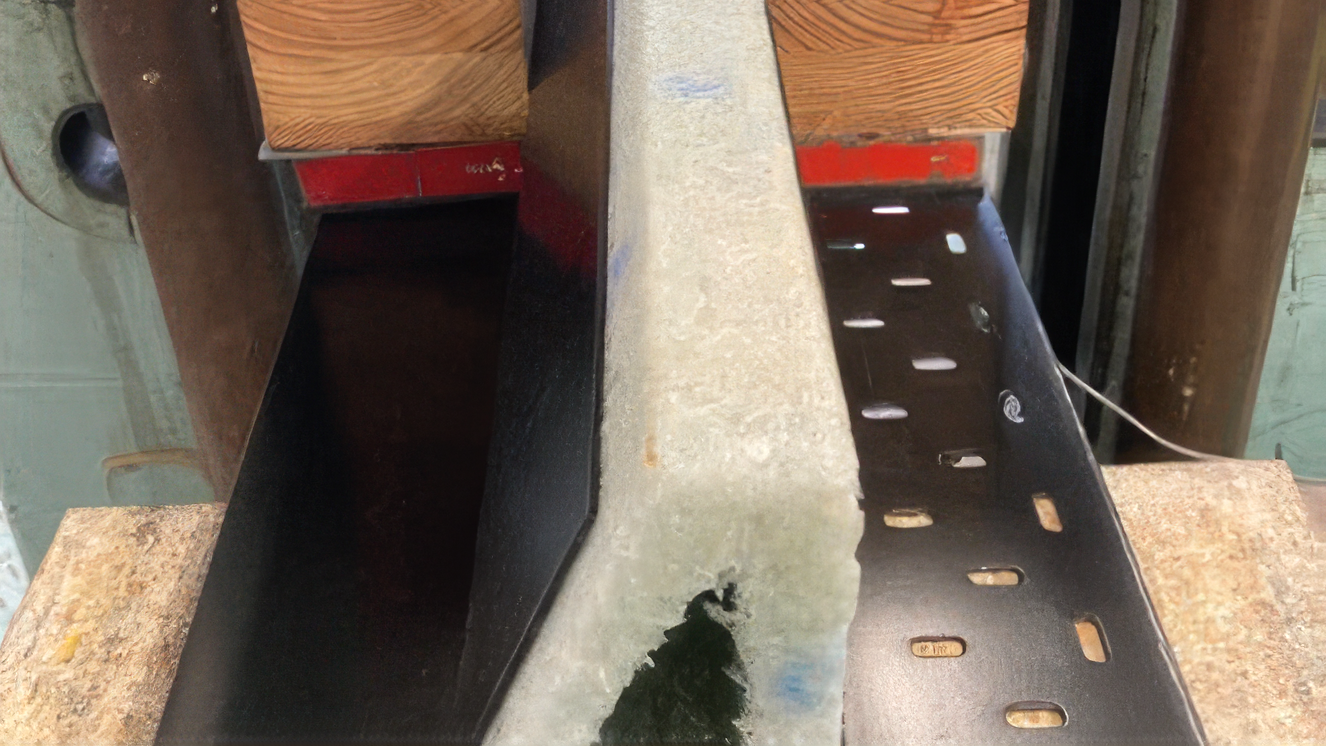
Opovate analysed a range of bio‑based alternatives and promoted the use of a mycelium‑grown insulation cores. They produced twelve 500 mm sample sections, enabling Catnic to manufacture four full lintels for early mechanical testing, demonstrating strong form, finish and encouraging compressive‑strength performance. Since collaborating with Catnic, Opovate’s solution has progressed from concept to a follow‑on grant to increase the TRL level, supported by a defined technical specification for a natural‑fibre insulation insert mapped onto Catnic’s existing product range.
“The iX process was straightforward and gave us a structured route to engage directly with Catnic’s technical and commercial decision-makers, which otherwise may have taken years to build.” – Robert Allen, Opovate
Tattva entered the programme with its Stromate insulation and soon began exploring a breakthrough idea: growing insulation directly onto the lintel profile, potentially removing the need for bonding adhesives entirely.
“The iX process was clear and well structured, giving us direct access to decision makers with straightforward reporting and grant claiming.” – Dr Steven Roberts, Tattva
Outcome
The collaboration resulted in the manufacture and testing of full‑scale lintel prototypes using both bio‑based insulation concepts.
Opovate has produced and refined first‑generation natural fibre inserts for Catnic’s leading lintel profiles, with early compressive and tensile testing indicating the material can meet structural and handling requirements while significantly reducing embodied carbon. Catnic’s informal handling and fit trials have further validated performance and informed ongoing design refinements.
Tattva’s Type 1 profile demonstrated near‑successful structural performance, with a clear pathway to meeting requirements. The project also led to the exploration of new manufacturing techniques, such as growing insulation directly onto lintels.
Business opportunities emerged, with Opovate working with Catnic to improve tensile strength through a follow‑on grant, and Tattva’s solution showing potential for further trials and commercial development. The partnership strengthened Catnic’s innovation pipeline and positioned the company to explore additional SME collaborations.
Conclusion
The Innovate UK iX programme played a pivotal role in accelerating collaboration and testing between Catnic and innovative SMEs outside their existing supply chain.
The structured, supportive framework enabled rapid prototyping and evaluation, demonstrating how novel materials can be adapted for structural applications in construction. By connecting Catnic with solution providers like Opovate and Tattva, the iX programme has helped drive sustainability and innovation in the construction sector, setting the stage for continued advancements and collaborations.
Through the iX process we accelerated collaboration and rapid testing, strengthened Catnic’s innovation pipeline, and opened the door to new SME partnerships. The programme highlighted the value of pairing established manufacturers with innovative SMEs and set the stage for future dialogue and trials beyond the initial scope.
– Richard Price, Catnic