

Future skills for autonomous robotics systems in space
Preparing the workforce to deliver the next generation of orbital infrastructure
As the UK accelerates its ambitions in the space sector, the role of autonomous robotics is becoming increasingly central to future capability. From in-orbit servicing and maintenance through to assembly and manufacturing, these technologies will underpin the next phase of commercial and strategic activity in space. However, unlocking this opportunity is not just a technical challenge—it is a workforce challenge.
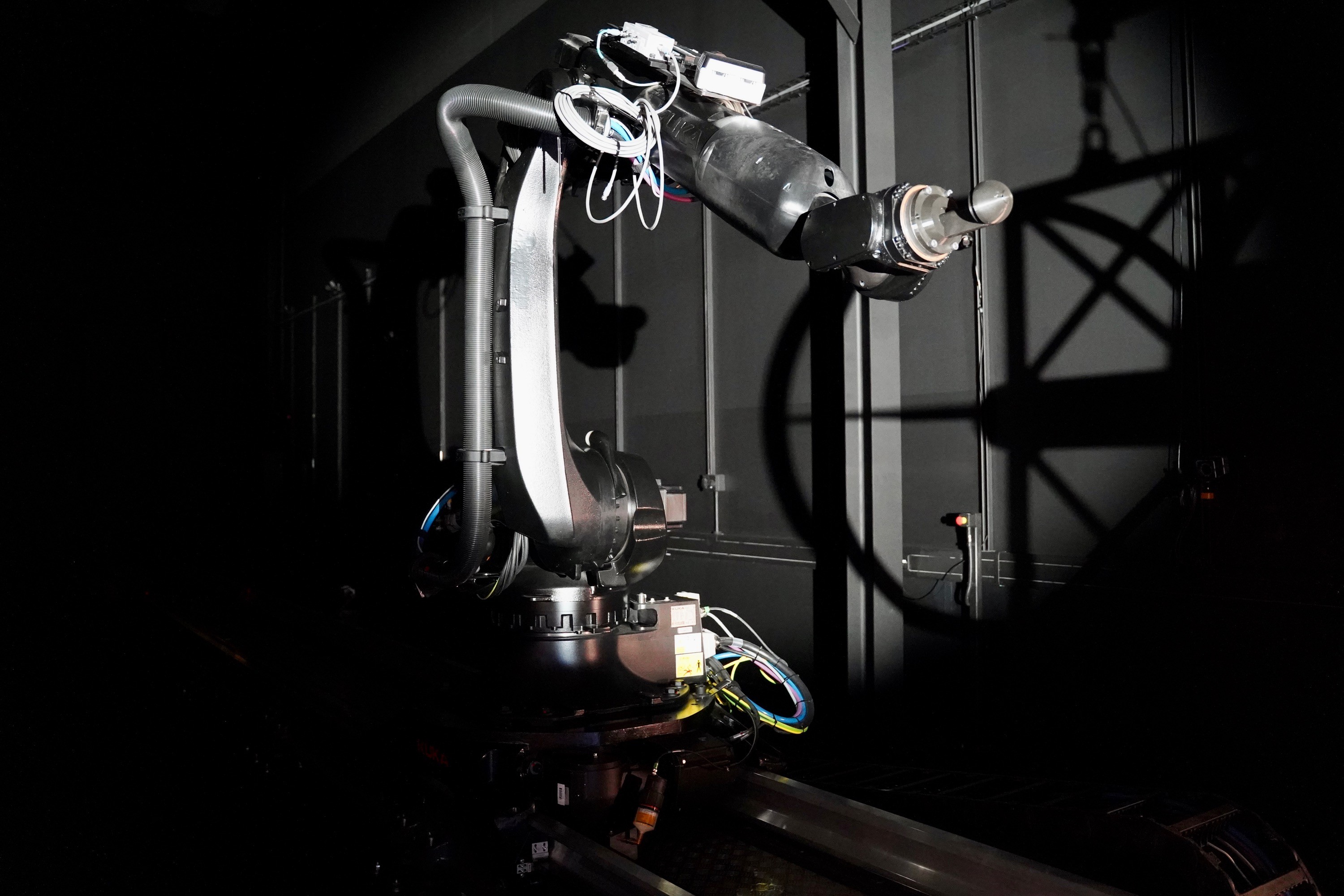
This report presents findings of a Workforce Foresighting study focused on Autonomous Robotics Systems for Operations in Space. The study was led by the Satellite Applications Catapult, in collaboration with the Workforce Foresighting Hub, an Innovate UK initiative, and supported by industry partners including Amentum, UKspace, Space Solar and Voyager Technologies.
Why workforce foresighting matters
Workforce foresighting provides a structured, evidence-based approach to understanding how technological change reshapes workforce demand. Rather than reacting to skills shortages once they emerge, it enables industry, educators and policymakers to anticipate future capability requirements and act early to address them.
In this study, foresighting was applied to one of the most complex and rapidly evolving areas of the UK’s space sector: adoption of autonomous robotics to support in-orbit servicing, assembly and manufacturing (ISAM). These technologies require new combinations of skills across robotics, artificial intelligence, systems engineering and regulatory assurance — capabilities that are not typically developed together within current education and training systems.
Strategic context
The UK space sector is entering a critical phase of growth, aligned to the National Space Strategy’s ambition to position the UK as a global leader in sustainable and innovative space technologies. Autonomous robotics is a foundational enabler of this vision, supporting activities such as satellite servicing, debris removal, in-space construction and long-term infrastructure development.
The scale of the opportunity is significant. In-orbit servicing, assembly and manufacturing alone is expected to represent a substantial economic opportunity for the UK, enabling new commercial models while reducing cost and risk across space missions. However, these technologies demand a level of autonomy and resilience that goes far beyond current terrestrial robotics applications.
This creates a structural workforce challenge. The sector does not simply require more engineers—it requires specialists capable of designing, deploying and governing autonomous systems in extreme environments, combining robotics, AI and space-specific expertise.
Implications for the workforce
The study highlights that the workforce transformation for autonomous space robotics will be both deep and systemic. This is not a case of adapting existing roles or scaling current provision; it requires the creation of new capability architectures that reflect the complexity of designing, deploying and governing autonomous systems in orbit.
At the core of this shift is the emergence of new and highly integrated capability requirements. The identification of sixty-one future capabilities—many of which are not currently represented in existing roles—signals a decisive move towards system-level thinking. These capabilities are heavily concentrated in design and integration activities, reflecting the early-stage, pioneering nature of the sector, where the challenge is not operation at scale, but the creation of viable, safe and interoperable systems from first principles.
Four critical themes underpin this transformation: software-driven autonomy, simulation and validation, systems integration, and regulatory assurance. Together, these highlight the increasing convergence of disciplines that have traditionally been developed separately. The future workforce will need to combine expertise in robotics, AI and digital systems with an understanding of mission context, safety and governance. This marks a shift away from specialist roles operating in silos and towards multi-disciplinary professionals capable of navigating complex, interdependent systems.
This transformation is reflected in the definition of Future Occupational Profiles, which represent clusters of capabilities rather than fixed job roles. These profiles emphasise the need for layered specialisation—deep expertise in a core discipline, combined with broader systems awareness and cross-functional capability. They provide a more flexible and future-facing framework for workforce planning but also require a rethink of how training and career pathways are designed.
However, the study also makes clear that the current skills system is not yet configured to support this transition. The issue is not simply a lack of provision, but a structural misalignment between how skills are developed and what the sector will require. With existing education pathways delivering only partial coverage of future capability needs, there is a significant gap between academic preparation and operational readiness.
A key driver of this misalignment is the continued reliance on discipline-based education models, despite the sector’s increasingly integrated capability demands. As a result, even highly qualified graduates are unlikely to be immediately deployable without further upskilling, creating a persistent “last mile” challenge for employers. This is compounded by the limited availability of applied, hands-on learning opportunities, which are critical in developing the practical judgement and system-level thinking required in this domain.
The structure of provision also introduces additional risk. Capability development is currently concentrated in a small number of specialist higher education programmes, creating a narrow and constrained entry point into the sector. This limits both the scale and diversity of the talent pipeline, while placing pressure on a small number of institutions to meet future demand. At the same time, the relative lack of advanced apprenticeships and structured CPD pathways restricts the ability to scale capability, enable career transition, and support mid-career specialisation—all of which are essential in an emerging and rapidly evolving field.
These challenges are further intensified by cross-sector competition for talent. The capabilities required—particularly in AI, autonomy and systems integration—are highly transferable and in demand across defence, nuclear, advanced manufacturing and digital industries. As a result, the space sector is not only facing a supply constraint, but also a competitiveness challenge, where attracting and retaining talent becomes as critical as developing it.
Taken together, this creates a compound risk profile for the sector: insufficient volume of talent, gaps in capability depth and integration, limited pathways for scaling and reskilling, and sustained pressure from competing industries. The workforce pipeline is therefore not only narrow and fragile, but lacking the resilience and flexibility required to respond to emerging demand at pace.
Without targeted intervention, workforce capability will become the primary bottleneck to growth in autonomous space systems. The risk is not just slower delivery—it is a failure to capture strategic and economic value, with activity potentially migrating to regions where workforce capability is more readily available. Conversely, organisations and nations that act early to build flexible, capability-led workforce systems—spanning education, industry and policy—will be best positioned to lead in this emerging market.
Next steps
The report outlines a series of coordinated actions required to address these challenges and build a sustainable workforce pipeline.
Key priorities include expanding and protecting specialist higher education provision, strengthening and incentivising apprenticeship pathways, and developing targeted continuing professional development to address immediate capability gaps. There is also a strong emphasis on creating structured industrial placements and hands-on learning opportunities to bridge the gap between theoretical knowledge and applied capability.
Beyond individual interventions, the study highlights the need for greater alignment across industry, education and policy, including the establishment of coordinated governance and stronger cross-sector collaboration to maximise workforce mobility and resilience.
Related programme

Workforce Foresighting
How do we build a skilled workforce for tomorrow’s industries? The Workforce Foresighting Hub has developed a structured process, aligned with national policy, to help deliver a workforce to exploit innovative technologies in the UK. We’re supporting industry, policymakers and educators to adapt to continuing change.