

Future skills for advanced battery recycling
Preparing the workforce for a circular battery economy
As the UK moves towards net zero and scales up electric vehicle and energy storage adoption, batteries are becoming a critical foundation of the industrial system. However, the challenge is no longer just manufacturing batteries at scale. It is also how to safely recover, reuse and recycle at the end of their life.
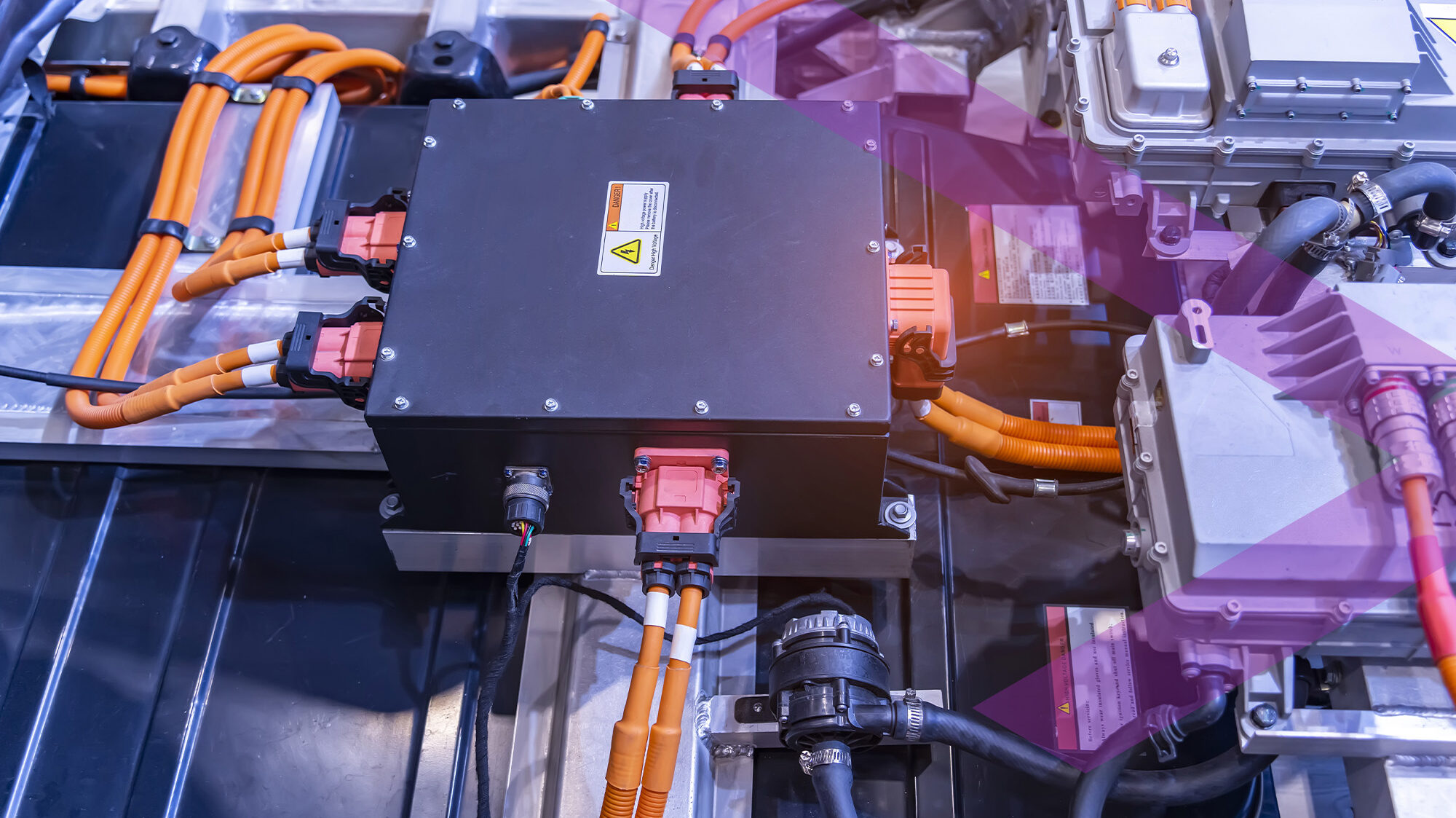
This Workforce Foresighting study led by WMG in collaboration with the Workforce Foresighting Hub focused on Advanced Battery Recycling. The study explores how the UK can build the skills, roles and capabilities required to process manufacturing waste and end-of-life batteries, enabling sustainable material reuse and strengthening domestic resilience.
Why workforce foresighting matters
Workforce foresighting is a structured, evidence-based approach to understanding how workforce requirements will evolve in response to emerging technologies. It brings together employers, educators and technologists to identify future capability needs early, enabling the skills system to respond proactively rather than reactively.
In the context of battery recycling, workforce foresighting is critical because the sector is emerging rapidly, while the associated workforce capability needed is not yet in place. Without early intervention, skills shortages risk becoming a major bottleneck—limiting growth, increasing reliance on overseas processing, and undermining the UK’s circular economy ambitions.
Strategic context
The UK is investing heavily in gigafactories and battery production, supported by over £2 billion in public and private investment. At the same time, forecasts indicate that more than 350,000 tonnes of battery material will require processing annually by 2035.
Despite this rapid growth, there is currently no coherent national workforce strategy for battery recycling. Regulation remains fragmented, training provision is limited, and the skills required across recovery, reuse and recycling are not yet addressed at scale.
The transition to a circular battery economy also introduces new technical and system-wide challenges across the full supply chain, including:
- Safe high-voltage battery handling and dismantling.
- Reverse logistics and storage.
- Advanced diagnostics and reuse decision-making.
- Metallurgical recovery of critical materials.
- Environmental compliance and digital traceability systems.
Together these shifts represent a fundamental transformation from linear manufacturing to circular, multi-stage value chains, requiring new cross-disciplinary capabilities across engineering, logistics, digital systems and regulation.
Implications for the workforce
The most significant insight from the study is not simply that skills gaps exist, but that they are systemic, cross-cutting and structural. The transition to a circular battery economy is creating entirely new capability requirements across the value chain—not incremental extensions of existing roles. As a result, the workforce challenge is less about scaling current training and more about redefining what “battery capability” actually looks like in practice.
The study identified 19 Future Occupational Profiles showing the scale and breadth of change across the battery recycling value chain. Spanning recovery, logistics, reuse, recycling and regulation, these profiles demonstrate that workforce transformation will be needed across the entire ecosystem, rather than within isolated functions.
Critically, the consistent low alignment with existing apprenticeship standards indicates that this is not a marginal curriculum issue; it points to a fundamental mismatch between how the system currently develops skills and what industry will need in future.
At a capability level, the emerging skills demand reflects a convergence of disciplines that are rarely combined in current roles. Technical expertise in high-voltage systems, for example, must now be integrated with decision-making around battery health, safety protocols, and reuse potential. Similarly, traditional engineering roles are increasingly expected to incorporate elements of data analysis, regulatory compliance and sustainability performance. This creates a new expectation for hybrid skillsets, where individuals must operate confidently across technical, operational and governance domains.
Another key implication is the rising importance of decision-making capability within the workforce. Battery recycling is not a purely process-driven activity; it requires continuous assessment, whether determining state-of-health, selecting reuse pathways, or ensuring compliance with environmental standards. This shifts the workforce requirement towards roles that combine technical execution with judgement, supported by digital tools and data systems. In practice, this means a greater emphasis on training individuals to interpret data, manage risk and make informed decisions, rather than simply execute predefined tasks.
From a system perspective, the shift towards circularity fundamentally changes how supply chains operate and how skills are distributed across them. The growing importance of reverse logistics, for example, introduces entirely new capability requirements around tracking, transporting and safely storing end-of-life batteries. Similarly, the increasing focus on materials recovery and traceability elevates the role of compliance, data management and auditability across the workforce. These are capabilities that sit outside traditional manufacturing paradigms, reinforcing the need for new occupational pathways rather than adaptations of existing ones.
Alongside these technical and operational changes, the study signals a broader organisational shift. There is a clear movement away from a workforce dominated by implementation roles towards one that requires stronger capabilities in design, enterprise and logistics functions. This reflects the increasing complexity of managing circular systems at scale, where success depends not just on execution, but on system design, coordination and governance. As a result, organisations will need to rebalance their workforce composition—investing more heavily in roles that can design processes, integrate systems and manage end-to-end lifecycle performance.
Importantly, the Future Occupational Profiles themselves represent a different way of thinking about workforce development. Rather than defining fixed job roles, they describe clusters of capabilities that can be applied across different organisational contexts. This creates greater flexibility in how roles are designed and how individuals move between them, but it also requires a shift in how training and qualifications are structured. Education and training systems will need to move towards more modular, capability-based approaches, enabling skills to be built incrementally and applied across multiple parts of the supply chain.
Ultimately, the implication is that workforce development becomes a strategic enabler of sector growth, rather than a supporting function. The ability to design, deliver and scale the right skills provision will directly influence whether the UK can capture value from battery recycling domestically. Without this capability, there is a clear risk that the sector will remain fragmented, reliant on ad hoc training and unable to scale at the pace required.
In summary, the workforce challenge in battery recycling is not about filling isolated gaps—it is about building an entirely new skills architecture to support a circular industrial system. Organisations that recognise this early and invest in capability-led workforce planning will be better positioned to lead the sector. Those that rely on existing roles and provision risk being structurally unprepared for the transition.
Next steps
The findings make clear that incremental change will not be sufficient. Coordinated action is required across industry, government and education to close the skills gap and enable sector growth.
Recommended actions include:
- Establish a national skills action group to coordinate workforce development across stakeholders
- Validate and publish Future Occupational Profiles to guide skills planning and qualification design
- Develop new Level 3–5 pathways and short courses in priority areas such as battery dismantling, diagnostics, logistics and materials recovery
- Launch targeted CPD and reskilling programmes to support rapid workforce transition
- Commission workforce demand forecasting to align training provision with future need
- Implement professional recognition frameworks to support workforce mobility across the battery lifecycle
Subject to funding, digital enablement through workforce data platforms will support scaling—enabling more dynamic skills matching, planning and system-wide insight.
Related programme

Workforce Foresighting
How do we build a skilled workforce for tomorrow’s industries? The Workforce Foresighting Hub has developed a structured process, aligned with national policy, to help deliver a workforce to exploit innovative technologies in the UK. We’re supporting industry, policymakers and educators to adapt to continuing change.