

Meet the Future Leaders Fellowships innovators shaping what comes next
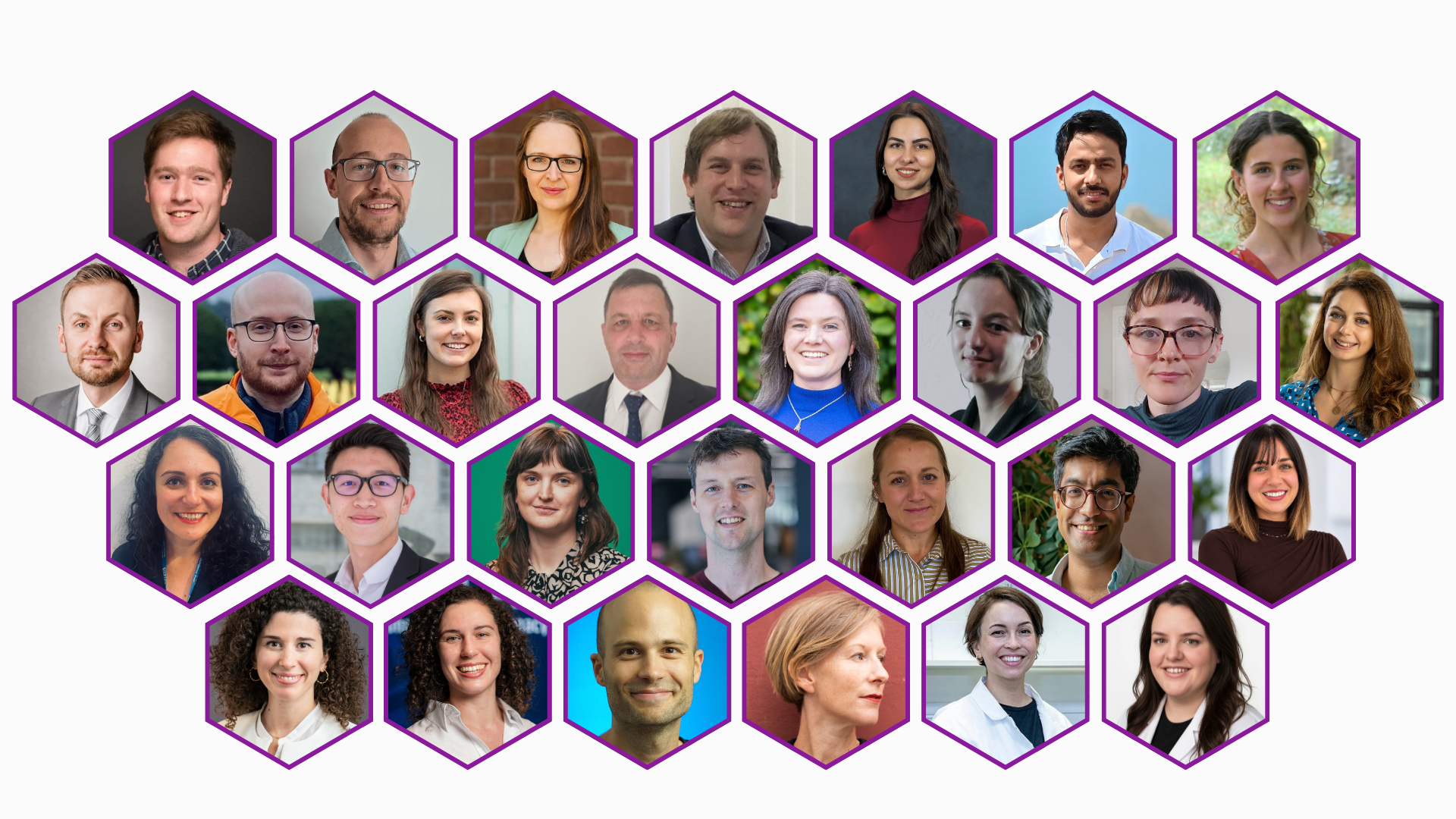
Backing the next generation of innovation leaders
Innovate UK is welcoming a new cohort of business fellows to the UKRI Future Leaders Fellowships (FLF) programme, supporting ambitious innovators to develop bold ideas with the potential to create lasting impact.
From life sciences to quantum technologies, this year’s fellows are tackling a diverse range of challenges and bringing new thinking to opportunities facing the UK.
Supporting future innovation leaders
The UKRI FLF programme supports talented researchers and innovators to develop their careers while pursuing ambitious programmes of research and innovation.
Since its launch in 2018, the programme has supported over 750 researchers and innovators. Fellows receive at least four years of funding of between £100,000 and £3 million, alongside opportunities to develop their skills, networks and leadership skills.
For Round 10, 28 business fellows, more than any previous year, have been selected following a competitive application and assessment process.
The round received 385 applications, with 355 applications assessed, 73 applicants interviewed and 28 successful business and non-academic fellowships awarded.
Through their fellowships, the new cohort will have the opportunity to advance their ideas, build teams and collaborations, and pursue innovations with the potential to deliver economic and societal impact.
Ambitious ideas with real-world potential
The Round 10 business fellows represent a broad range of ideas, sectors and areas of expertise.
Across the cohort, their work spans healthcare and diagnostics, clean energy and circularity, quantum technologies, advanced manufacturing, digital innovation and new approaches to climate resilience.
While their areas of focus differ, the fellows share an ambition to turn innovative ideas into solutions with the potential to create meaningful real-word impact.
Different perspectives, shared ambition
The 28 business fellows are based across the UK, with awardees spanning Scotland, Wales, London, the Midlands, the North East, North West, East of England, South East and South West.
Their host organisations also reflect the breadth of the cohort, ranging from growing businesses and specialist technology companies to major industrial organisations, healthcare partners, charities and Catapults, including the Offshore Renewable Energy Catapult.
Meet the Round 10 business and non-academic fellows
The 28 fellows are developing innovations across a wide range of sectors and technologies. Explore the dropdowns below to meet the new cohort and discover what they are working on.
-
- Boon Lim – Spectre Bio: Developing an immune-training approach to strengthen antiviral defences against emerging respiratory viruses.
- Agata Nyga – Mechanome Bio: Developing MechanoMap to explore how mechanical forces in tissues can reveal new drug targets.
- Bhav Radia – The Learning Lab: Building a healthcare learning platform combining AI simulation with competency assessment.
- Carolyn O’Dwyer – Fraunhofer UK: Developing quantum magnetic sensors to improve brain imaging and neurological diagnosis.
- David Brown – Reach Industries Limited: Developing Lumi LabOS to create structured, audit-ready records of laboratory experiments.
- Emanuela De Falco – Neuronostics Ltd: Developing EEG-based biomarkers to improve prognosis after traumatic brain injury.
- Joanna Gould – VisusNano Ltd: Developing a biodegradable implant as an alternative to anti-inflammatory eye drops after surgery.
- Katie Staunton-Mann – LabLogic Systems: Developing quality-control technology for safer production of alpha cancer therapies.
- Lucrezia Cester – LightHearted AI Health: Advancing LightScope to support cardiovascular diagnosis and monitoring user laser-based sensing.
- Soudeh Chegini – ChaseAI Ltd and Bristol NHS Foundation Trust: Developing an AI platform to support real-time detection of head and neck cancer.
-
- David Sarlos – Vialog: Developing privacy-preserving video technology to support safer participation online.
- Jacqueline Campbell – Asterisk Labs and The Cloud Appreciation Society: Combing citizen observations and satellite data to improve understanding of cloud behaviour.
- Jo Lansdowne – Watershed Arts Trust: Developing an inclusive innovation framework for creative technology practitioners.
-
- Agnieszka Kuzdzal – Onya Therapeutics Ltd: Developing a scalable manufacturing platform for advanced medicinal patches.
-
- Dumitru (Dima) Sirbu – Power Roll: Developing lightweight, flexible solar technology for lower-cost renewable energy generation.
- Lorna Bennet – Offshore Renewable Energy Catapult: Exploring how circular economy principles can support a more sustainable wind sector.
- María Ubierna – Open Hydro: Developing a system to understand and manage greenhouse gas emission from freshwater environments.
- Natasha Boulding – Low Carbon Materials: Advancing a carbon-negative cement replacement towards industrial use.
- Phillipa Parry – NPK Recovery: Developing materials that capture and reuse nutrients from fertilisers and wastewater.
- Saurav Chandra – Johnson Matthey PLC: Developing a process that converts captured CO2 into sustainable fuels and chemicals.
- Urša Podbevšek – Johnson Matthey PLC: Investigating how to extend the lifetime of CO2 electrolysers for low-carbon chemical production.
-
- Zachary Cooper-Baldock – PrioriAnalytica: Developing a 3D ocean prediction engine to improve underwater communications.
-
- Dimitri Grigoriev – GravTech Solutions Ltd: Developing UAV-based gravity mapping for subsurface water and infrastructure insights.
- Harriet Milsted – Impact Advantage: Developing a system to predict the social impact of major decisions.
- James Wills – Oxford Quantum Circuits: Investigating decoherence to support more reliable quantum computing hardware.
- Stavroula Kapoulea – Kelvin Quantum: Developing a cryogenic interface for larger, more scalable quantum processors.
- Thomas Garth – International Seismological Centre: Improving earthquake location data to better understand faults and seismic risk.
- Will Thom – Quantum Base: Developing optical fingerprints within materials to help authenticate products.
Fellowship support in action
Since its inception, the Future Leaders Fellowships programme has supported hundreds of researchers and innovators, helping them translate their work into real-world impact.
Previous Fellow, Dr Jimmy Campbell at Plastrometrex has achieved an internationally recognised ASTM standard for their PIP materials testing technology. His Future Leaders Fellowship helped accelerate the research, validation and industry engagement needed to reach this milestone.
Learn more about Dr Campbell’s journey.
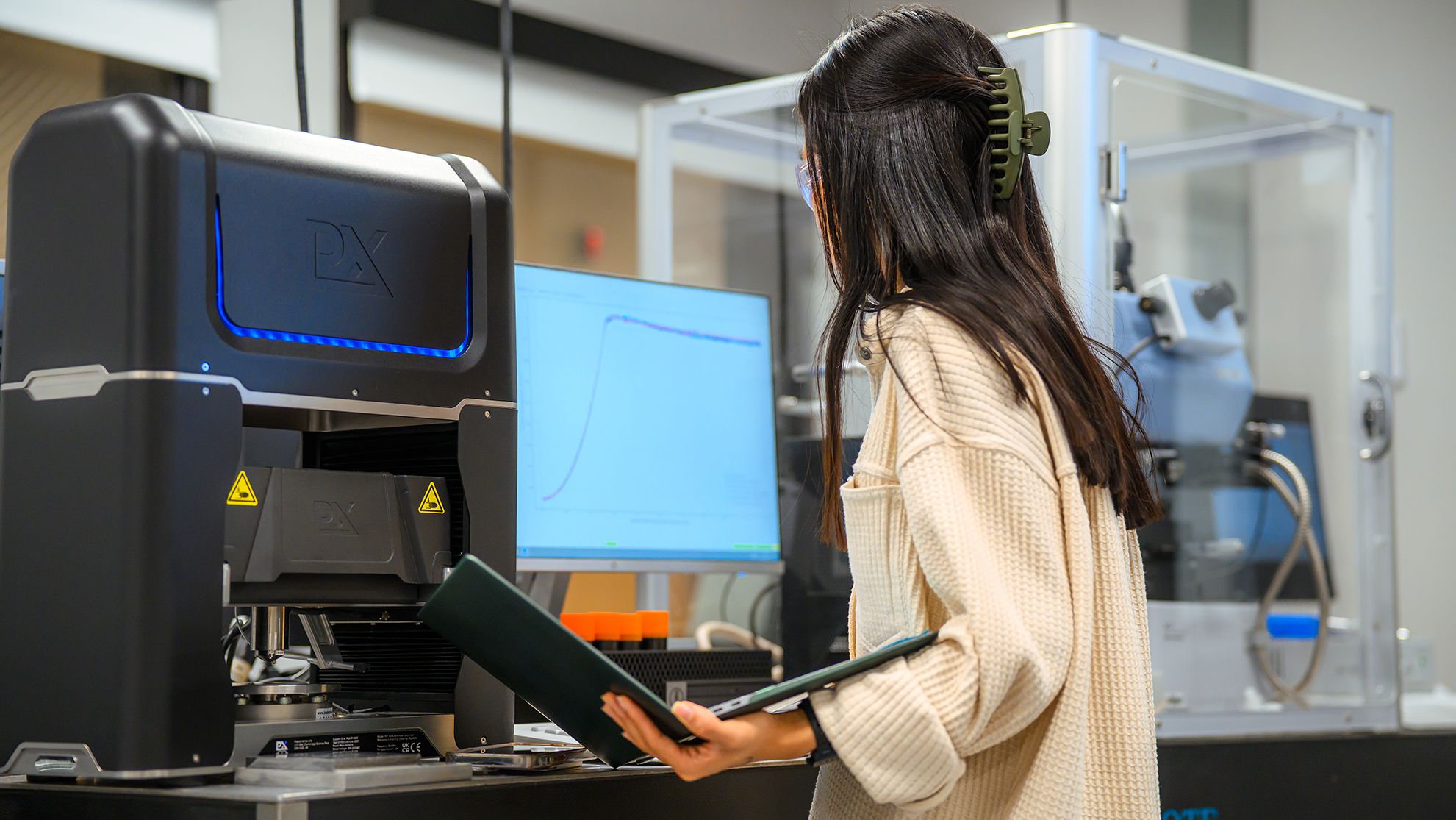
Rachel Carey, Co-founder & chief scientist at Zinc Innovation Partners, said:
“The FLF enabled me to build and lead a new team, work with 60+ ventures to help them apply and advance science, create innovation placements for 50+ PhD students and postdocs, and forge partnerships with major funders and universities across the UK. It has also supported me to co-found a new arm of Zinc called Zinc Innovation Partners, focused on finding new ways of translating science into impact.”
Building on the momentum
As the Round 10 cohort begins their Fellowship journey, they will build on the achievements of those who have come before them, turning ambitious ideas into impact, forging new collaborations and developing as innovation leaders.
We look forward to following their journey and sharing in their contributions to the future of research and innovation in the UK and internationally.
Could you be a Future Leaders Fellow?
If you have an ambitious research or innovation idea and are ready to take the next step in your career, discover how the Future Leaders Fellowships programme could support you.
- Applications for Round 11 of the Future Leaders Fellowships will close on 4 November 2026 (at 11am).
- Details for Round 12 will be available on the Innovation Funding Service in early 2027.