

Human Futures: How AI is shaping the human experience
The Innovate UK and Innovate UK Business Connect Human Futures events series brings together individuals from across the innovation ecosystem, to explore the impact, challenges and opportunities that emerging technology trends may bring for society over the next 30-to-50 years.
Our Humans and AI event focused on how the relationship between artificial intelligence (AI) and human identity could evolve in the future. This blog reflects on those discussions, combining forward-looking insights from the event with outputs of current research to reflect on the decisions that will shape how AI is developed and adopted as it continues to accelerate.
Work in an AI‑Enabled Economy
Where’s the AI-enhanced productivity?
The future:
Discussions explored the impact, both positive and negative, that AI could bring to the realities of work. This included how the activities of work may change, who we work with, and how the workplace itself might change as a result. This included discussion around AI agents as colleagues, AI as advisors, and AI as managers, reflecting AI politicians already emerging in some parts of the world.
The present:
Evidence from UK government research suggests that firms using AI are already seeing benefits, with 75% of firms reporting productivity improvements and 57% enhanced processes. Nonetheless, adoption remains a challenge. Only 16% of businesses use AI, and most businesses have no active plans to adopt it. Even among adopters, usage is uneven, with only 30% of staff using AI on average.
Among those utilising the technology, there is a growing recognition that working with generative AI (GenAI) is reshaping how individuals think and approach tasks. Users are adapting their behaviours, workflows, and problem-solving methods to align with the capabilities and limitations of GenAI rather than user-intent.
What jobs and skills be most affected by AI?
The future:
Discussions also explored the long-term impacts of AI on UK productivity, with participants considering what changes in the rate of AI adoption, further development of capabilities and policy interventions might mean in practice. The OECD AI Capability Indicators suggest that current AI systems remain far from full human equivalence and can currently perform only narrow tasks with limited variability. However, this is unlikely to remain the case over the next 30 years, as reflected by several participants’ concerns about the longer-term societal impacts of job displacement as AI capabilities evolve.
The present:
Current research on business sentiment shows that 32% of UK employed adults believe AI could put their job at risk. At present, capabilities are improving faster in certain sectors, such as business and professional services, relative to others such as the more blue-collar trades. This is potentially reflected in current data, with hiring is falling faster in occupations more exposed to generative AI. However, these roles are also more sensitive to other macroeconomic factors, so it is unclear what proportion of the fall is attributable to AI.
While it is estimated that 92 million jobs will be displaced due to shifting global trends, these shifts will also create 170 million jobs. This represents a 7% of net growth of total employment by 2030. Jobs which will rise include frontline roles such as farmworkers, construction, and care roles, and technology-related roles such as Machine Learning Specialists, Big Data Specialists, and Fintech Engineers. In the longer term, we will likely see roles emerge that currently do not exist.
How will skills and talent be developed in an AI-enabled world?
The future:
Discussions explored whether early career workers will have sufficient opportunities to build expertise and develop critical thinking skills if entry level tasks are increasingly automated, and how talent development might need to evolve as a result. Several participants highlighted their concerns for the UK’s ability to address future talent and skills requirements if this issue isn’t addressed alongside AI implementation.
At the same time, the skills required from young people are shifting. Demand is increasing for analytical thinking, creativity, resilience, flexibility, and continuous learning, while more routine cognitive, administrative, and manual skills are expected to decline in relevance.
As a result, in the future higher education may need to move away from teaching static knowledge towards more adaptive, skills-based models that better prepare individuals for a rapidly changing labour market.
The present:
So far, evidence suggests that generative AI may particularly impact skills building in white-collar, entry-level roles. For instance, Bloomberg found that AI could automate 53% of tasks performed by market research analysts, compared with 9% of a marketing manager, and 67% of tasks performed by sales representatives compared with 21% for a sales manager. Reflecting these expectations, 43% of business leaders worldwide report plans to reduce their entry-level and junior roles due to efficiency gains from AI, preferring to automate over upskilling and training.
A study by King’s College London examining shifts in workforce composition highlights that the concentration of job losses in these junior roles is disrupting the traditional skill development pathways. As participants noted, entry-level positions serve as a training ground, and firms will likely struggle to develop senior talent internally without these pathways.
Even as companies seek to automate some roles, several have already reversed these decisions. Klarna, for example, replaced 700 of its customer service employees for AI. This resulted in a decline in service quality and led the company to backpedal on its decision, ultimately rehiring human staff. This highlights the need for employers to take a more strategic and longer-term approach to automation to balance both efficiency gains and the value of human capabilities.
Even as AI adoption may contribute to a decline in some job listings, demand for AI fluent entry level hires is rising. On Handshake, an early-career job board, the share of full time job descriptions mentioning generative AI has increased fivefold since 2023, signalling a shift in the skills employers expect from entry-level workers. This aligns with perspectives shared at the Humans and AI event, where participants discussed alternative trajectories in which people work in tandem with AI, rather than being replaced by it.
AI Governance and Regulation
What will trustworthy AI governance look like?
The future:
When speaking about AI system governance, attendees contrasted the EU’s rule-first approach with the US’s more market-driven model. They suggested that any effective middle ground would require coordination mechanisms that are both legitimate and enforceable. The UK currently stands by a pro-innovation, regulator-led approach to AI. Attendees welcomed the flexibility of this model yet strongly agreed that proper oversight is essential to maintaining trust, and that governance will likely need to evolve as AI capabilities continue to develop.
The present:
Public trust in AI is clearly linked to visible, enforceable governance. A 2025 global survey by the University of Melbourne and KPMG found that only 46% of people are willing to trust AI systems, 70% believed that regulation is needed, and only 40% of people believe that existing laws and regulation governing AI systems in their country are adequate. This mirrored the conversations across tables.
Evidence from the Tony Blair Institute shows that 30% of adults cite lack of trust in AI generated content as a major barrier to adoption. Many view it as the government’s responsibility to ensure AI safety by enforcing rules, managing risks, and preventing harm. Importantly, trust in the government’s ability to regulate AI appears to be correlated with greater public optimism about the technology. This means that trust is not only about system performance, but also about credible governance.
Where does responsibility sit when AI informs decisions?
The future:
A key topic that emerged in discussions was the principle that while regulations can guide behaviour, accountability ultimately sits with human decisionmakers and the organisations that deploy AI systems. The challenge, therefore, lies in designing frameworks that preserve clear lines of responsibility, mitigate automation bias, and avoid “outsourcing” judgement to technology.
Conversations included the idea that governance should be proportionate to risk. For domains with material consequences like healthcare, energy, critical public services, the expectation was for regulation that includes rigorous testing, traceability, and a clear liability trail.
The present:
Several discussions noted current inconsistencies across sectors and sub-sectors, which can make compliance harder to navigate and erode confidence. The consensus was that as UK society we need to match the governance burden to the stakes, and make who is accountable unambiguous.
What next?
Conversations at the Humans and AI event started our exploration of just some of the ways AI might reshape society over the coming decades. While its exact impacts remain uncertain, it’s clear AI will continue to influence how we live, work, and make decisions. Our conversations reflected a shared sense that the long term effects of AI will be shaped by the choices made over time as the technology becomes more embedded in everyday life, and that we need to continue discussing and exploring these potential impacts so that we can work towards an AI future that adds value to all parts of UK society.
Related events and recordings
Tue
10
Feb
2026
See all events
Our experts


Related content
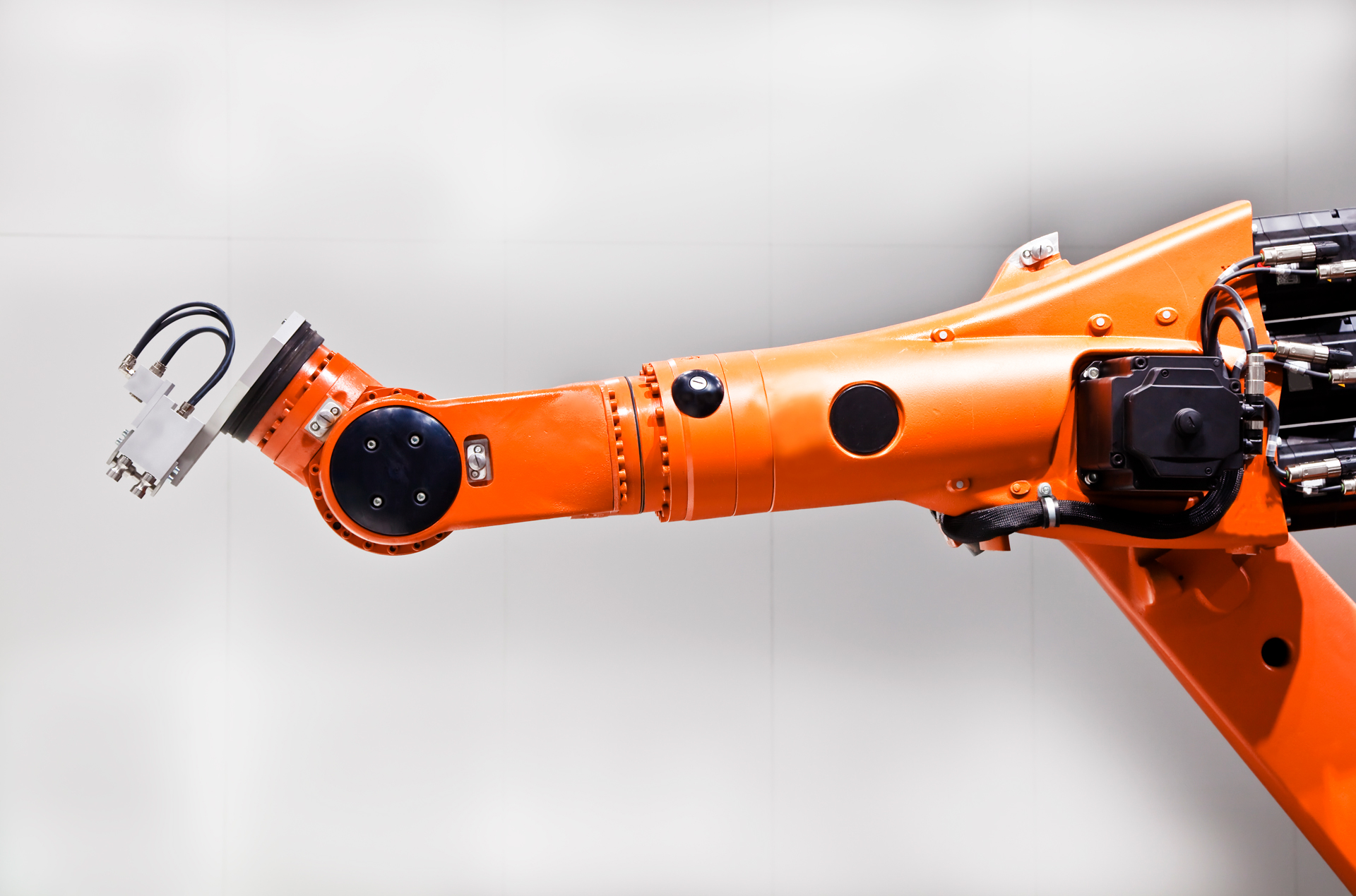
Robotics & AI
From healthcare to legaltech, Robotics and Artificial Intelligence are significant globalised technologies that can be applied in many sectors. The extensive industrial and academic research base in the UK can support both the national and global markets in addressing key challenges impacting societies today.