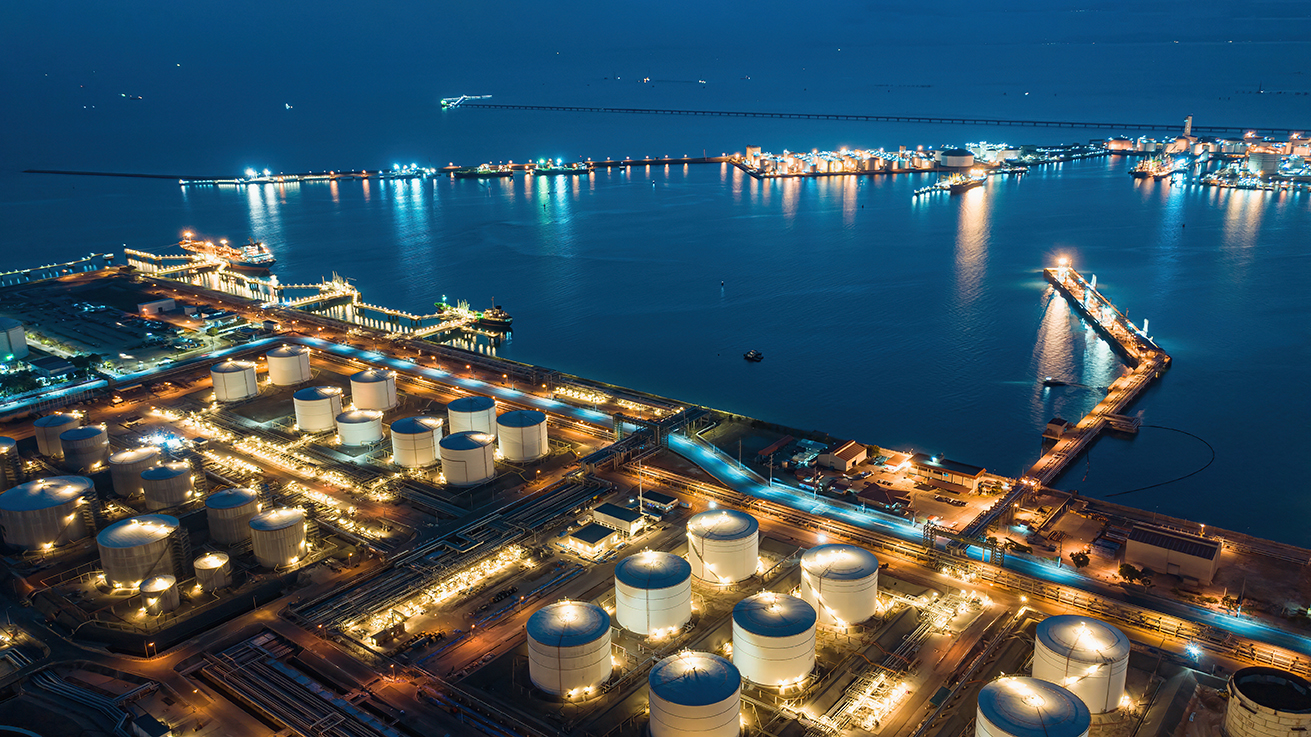

Innovate UK, part of UK Research and Innovation (UKRI), will work with the Department for Transport (DfT) to invest up to £150 million in innovation projects. These projects will develop, deploy and operate innovative clean maritime solutions for three years in a real world environment.
The Zero Emission Vessel and Infrastructure Round 2 (ZEVI 2) competition is part of a suite of interventions launched by the UK Shipping Office for Reducing Emissions (UK SHORE) programme. UK SHORE aims to transform the UK into a global leader in the design and manufacturing of clean maritime technology and accelerate the fuels and technologies required to decarbonise the sector to meet net zero. This competition supports the delivery of the UK Government’s Maritime Decarbonisation Strategy.
The overall aim of this competition is to fund UK business led development and build of innovative clean maritime technologies that reduce greenhouse gas emissions. Successful projects will be required to demonstrate their technology for three years without funding support. This competition is open to collaborations only.
The three strands of the competition will fund:
- alternative fuel vessels (this strand)
- alternative fuel bunkering and storage infrastructure within ports (this strand)
- 100% battery electric vessels
- vessel charging infrastructure
- shore power and port energy infrastructure
- vessel energy efficiency technology
Alternative fuels (zero and near zero GHG emission fuels) are defined in the Scope section.
Your proposal must build, deploy and operate for three years innovative clean maritime technologies focussed on on-vessel technologies and any related shoreside infrastructure, including at ports, harbours, inland waterways, marinas and offshore.
The ZEVI 2 competition is funding technology development and build across three strands:
- Zero Emission Vessels and Infrastructure 2: Alternative Fuels (this strand)
- Zero Emission Vessels and Infrastructure 2: Electric Power
- Zero Emission Vessels and Infrastructure 2: Energy Efficiency
The Alternative Fuels strand will fund the development and build of innovative alternative fuel vessels and accompanying port refuelling infrastructure.
The Electric Power strand will fund the development and build of:
- innovative 100% battery electric vessels and accompanying charging infrastructure, and
- novel, innovative and commercially viable shore power systems including related energy infrastructure at ports and any accompanying vessel upgrades
The Energy Efficiency strand will fund the development and build of innovative vessel energy efficiency technology and any accompanying innovative infrastructure upgrades.
Your demonstration must include the vessels and any infrastructure being used in a representative real world operational environment for a period of three years.
It is your responsibility to ensure you submit your application to the correct strand for your project. You will not be able to transfer your application and it will not be sent for assessment if it is out of scope. If you are in any doubt about which strand to apply into, you must check by email to support@iuk.ukri.org at least 10 working days before the competition closes. You can also contact Innovate UK Business Connect’s Transport team for advice.
We encourage projects that have been successful and were funded by previous Clean Maritime Demonstration Competition (CMDC) rounds, to apply for further funding support to continue developing your projects. However, you are not required to have been successful in a previous round of the CMDCs to apply with an eligible project to ZEVI 2.
-
This competition is open to collaborations only.
To lead a collaborative project your organisation must:
- be a UK registered business of any size
- be, or collaborate with, a UK registered ship owner, manufacturer or operator
- be, or collaborate with, a UK registered infrastructure owner or operator, for example, a port, harbour, marina, inland waterway authority or windfarm
Ship is defined in the Merchant Shipping Act (MSA) 1995 Section 313(1). Trust ports and Municipal ports will be treated as businesses.
To collaborate with the lead, your organisation must be one of the following UK registered:
- business of any size
- academic institution
- charity
- not for profit
- public sector organisation
- research and technology organisation (RTO)
A business can only lead on one application across all three strands of this competition. A business can also lead on one application across all three strands of Clean Maritime Demonstration Competition 7 (CMDC 7).
If leading an application, a business can also be included as a collaborator or subcontractor in two further applications across all three strands of this competition and the CMDC 7.
If a business is not leading any application, it can collaborate or be a subcontractor in any number of applications across all three strands of the ZEVI 2 and the CMDC 7 competitions.
Applications that do not meet these requirements will be made ineligible, in order of the most recent submission being made ineligible first.
All other eligible organisations can collaborate on any number of applications.
If you are involved in more than one application, you must clearly state how all projects can be resourced and delivered if successful. You may be asked for further evidence of your resources at interview, if invited.
-
Your project must:
- have total eligible costs between £6 million and £60 million
- start by 1 April 2027
- claim all grant funding by 31 December 2029
- complete a non-funded three year demonstration, starting by 1 January 2030 and ending by 31 December 2032
- have a maximum total project grant funding request of no more than £30 million, of which no more than £20 million can be allocated to a single participant
Grant funding can cover up to 70% of costs, depending on business size and project type.
Any funded organisation must intend to exploit the project results from or in the UK.
-
The Alternative Fuels strand will fund the development and build of innovative alternative fuel vessels and accompanying port refuelling infrastructure.
Alternative fuel is defined as zero and near zero GHG emission fuels. The difference between low carbon fuels and zero and near zero GHG emission fuels is described in Box 3 of the Maritime Decarbonisation Strategy (on page 28 of the Maritime Decarbonisation Strategy PDF). For the purposes of this competition, zero and near zero GHG emission fuels are defined as fuels with a GHG Fuel Intensity (GFI) of no more than 19.0 grams of carbon dioxide equivalent (gCO2eq) per megajoule (MJ). GFI must be calculated on a well-to-wake basis.
Well-to-wake emissions are defined as the sum of well-to-tank and tank-to-wake emissions. Tank-to-wake emissions are the emissions that are generated by operating maritime vessels. Well-to-tank emissions are the emissions from the production and distribution of the fuels and other energy sources that are used by maritime vessels. For more details see:
-
Your project will be funded from the agreed start date up until 31 December 2029, for costs associated with:
- project delivery
- vessel development
- infrastructure development
You must demonstrate all funded vessels and infrastructure in a real world environment for three years, without grant funding support, ending 31 December 2032.
Your proposal must:
- evidence you can build or retrofit vessels with clean maritime technology and build accompanying infrastructure to be ready for demonstration by 31 December 2029
- fully define, cost and evidence commercial viability of an extensive demonstration in real world conditions for three years before 31 December 2032
- demonstrate a significant reduction in the well-to-wake greenhouse gas emissions from the maritime sector, including where relevant, addressing air pollution risks or other environmental impacts from decarbonisation solutions
- include relevant representative end users such as a vessel operators, port or harbour authority: the end users must be an integral part in the project development and demonstration
- demonstrate significant market potential through a clear strategy for commercialising the technology and the products, demonstrating the potential for significant value to the UK
Your project must:
- have a realistic and comprehensive build or retrofit plan that controls external risk associated with commercial, regulatory and supply chain factors
- demonstrate operational utilisations of your vessels and infrastructure by operating vessels in various locations and sea states, while performing a range of duty cycles to reflect a full scale commercial operational profile
- collaborate fully with organisations responsible for regulation, safety and incident response to conduct a safe demonstration
- ensure all funded vessels and infrastructure are in operation by 31 December 2029; vessels can be deployed earlier or in stages if appropriate but the demonstration period starts once all funded technology is in operation
- ensure adequate training is provided for all those using the vessels or infrastructure
- ensure there are appropriate repair and maintenance provisions for your vessels and infrastructure during the three year demonstration period
Throughout, and at the end of your project you must:
- produce a clear, detailed and costed plan to fully scale and enter the solution into UK and global markets over the following three years after project completion, including your technical approach, objectives and business case
- produce a summary report for public release of lessons learned from the project
- quantify the actual and potential reduction of well-to-wake greenhouse gas emissions, the actual and potential impacts on other emissions and positive economic impacts in the future
- develop evidence on expected commercial applications and exploitation, and potential market segments
- explain your understanding of any barriers to market adoption
- detail the barriers to adoption that the future demonstration will overcome and the innovation that will be delivered
- share your demonstration data and findings with the Department for Transport (DfT), Maritime and Coastguard agency (MCA), Innovate UK and any third party contractors appointed by them
- produce a clear plan for disseminating the results of your project and knowledge sharing to government, industry and academia
- provide the evidence required to support the DfT’s evaluation of the scheme
-
Your demonstration must include the vessel and infrastructure technology being used in a representative real world operational environment for a period of at least three years. The demonstration must reflect a full scale commercial operational profile and the vessel and infrastructure technology must have significant use throughout the demonstration period.
There is no fixed definition of how projects must undertake their demonstration and use this three year period. The demonstration will depend on your project, technology and what is required to prove its performance. We require projects utilise this three year period fully and to gather as much performance data as possible.
Your application must clearly state how you plan to undertake the demonstration, including how much time in operational use you currently expect and why this is appropriate for your project. During the demonstration you must validate the technology, vessel and infrastructure operation for the use case or target market and capture data on the performance, including its impacts on greenhouse gas emissions and other environmental impacts.
Projects which include a vessel intended to operate at sea must include appropriate demonstrations for three years at sea. Projects may undertake initial tests in categorised waters before progressing to sea, subject to compliance with relevant regulations, but this must be done before the three year demonstration period.
Vessel demonstrations should plan to operate in a variety of sea states. Vessels must comply with and be certificated in accordance with relevant regulations before proceeding to sea.
Applicants should be aware that the demonstration must start by December 2029 which is when sea states are typically greater around the UK.
Projects which include vessels operating on categorised waters, for example, inland waterways, that will never operate at sea can complete their full demonstration within categorised waters.
The three year demonstration period should take place in UK waters wherever possible. If the vessel in your project is intended to operate in inland waterways or territorial seas only, the demonstration must take place only in UK inland waterways or UK territorial seas.
International vessel operations are only acceptable where they are a normal and necessary part of the vessel’s commercial operational profile. International journeys must be fully justified and the benefit to the UK clearly explained. International journeys must originate from the UK and must have frequent visits to the UK. We will not fund international infrastructure nor accept operations originating outside the UK.
-
Types of vessel and vessel regulation
Technologies for all sizes and categories of maritime vessel subject to the Merchant Shipping Act 1995 are in scope, including pleasure, commercial fishing and aquaculture vessels. Solutions can be suitable for one target size of vessel or multiple. Vessels must comply with relevant regulations when undertaking voyages and where appropriate, be certificated subject to vessel type. These vessels cannot proceed to sea without relevant seagoing certification.
For a project involving a new hull, the vessel must be a United Kingdom Ship built to Classification Society or Certifying Authority rules. The vessel must remain a UK Ship under that Classification Society or Certifying Authority for the full demonstration period. United Kingdom Ship is defined in 85(2) of the Merchant Shipping Act 1995.
For a project involving testing technology on an existing vessel, the vessel is expected to be a United Kingdom Ship, otherwise you must provide justification for not using a United Kingdom Ship in your application. The vessel must be under Classification Society or Certifying Authority Rules during build or retrofit and during the demonstration period.
Projects involving a vessel must engage with the Maritime and Coastguard Agency (MCA) during the project. The MCA may also contact successful projects shortly after you are notified to discuss the details of your project. Failure to engage with the MCA when requested could result in your project being suspended or funding withdrawn.
Types of Infrastructure
Any physical structures or systems necessary to enable alternative fuel vessel operations, onshore or offshore are in scope. This includes infrastructure for freight, passenger, pleasure and commercial vessels, located at, for example, ports, harbours or wind farms. Port based energy systems that supply energy to maritime vessels are in scope. This includes innovative localised energy generation, load management and energy storage solutions to supply energy to maritime vessels.
You must:
- ensure all proposed infrastructure funded through the programme is, accessible to other operators outside the consortia by appointment and at a suitable market rate
- ensure infrastructure is located to enable a variety of operations, potentially including offshore charging
- ensure all infrastructure funded through the programme is extensively used by vessels
- meet all safety, regulatory and legal requirements
- align with current and emerging international standards
- describe any decommissioning that is required at the conclusion of the demonstration; infrastructure which can viably be repurposed does not require decommissioning
Projects can use existing or planned infrastructure where it is compatible with their demonstration.
-
Your project can focus on one or more of the following:
Priority theme: Projects involving multiple vessels for multiple end users. Your priority theme project must also address the central theme below. This priority theme is of particular interest in this competition, but we welcome all applications that address the central theme.
Central theme: Your project must focus on the following: alternative fuel, or hybrid electric and alternative fuel, new build or retrofit vessels and accompanying refuelling infrastructure, including onboard fuel cell and combustion technology.
Note: alternative fuel projects must intend for any fossil fuel usage to be as a pilot fuel only.
Smart shipping, digital and autonomy technologies are in scope only if developed as part of a project focussed on the above themes.
-
We are not funding projects that are:
- focusing on increasing the combustion efficiency or improving the design of conventional fossil fuel powertrains, except where related to waste heat recovery
- including funded costs for fossil fuels and fossil fuel powertrains unless the powertrain can use alternative fuels
- focusing on battery electric vessels that are not 100% battery electric, for example, propulsion systems that are a hybrid of electric and fossil fuel
- focusing on shore power systems that are not novel, innovative and commercially viable
- focusing on marine conservation and ecology
- focusing on removing non-GHG and indirect GHGs from the combustion products of conventional fossil fuels and synthetic fossil fuels
- focusing on non-methanol biofuels, except for projects that utilise biofuels as a pilot fuel or secondary fuel on vessels predominantly powered by methanol, ammonia or hydrogen that are zero or net zero GHG emission
- focusing on Personal Watercraft (PWC)
- focusing on the use and production of synthetic fuels, note: this exclusion does not apply to the use of zero or near zero greenhouse gas emission methanol, ammonia and hydrogen fuels
- focusing on submarines and submersible vessels
- focusing on military applications
- covered by existing commercial agreements to deliver the proposed solutions
- a duplicate of existing innovation
-
Innovate UK Business Connect held a briefing event in London on Wednesday 15 April: click here to watch the livestream of the funding briefing section. You can also download the briefing slides.
If you would like help to find a collaborator or decide which strand to apply for, contact Innovate UK Business Connect’s Transport team.
Innovate UK's application and funding process
If you need more information about how to apply, please read our funding support pages. For additional support, reach out to our team of innovation experts who are ready to help you navigate the application process and maximise your chances of success.
For more information

Accessibility and Inclusion
Innovate UK welcome and encourage applications from people of all backgrounds and are committed to making our application process accessible to everyone. This includes making reasonable adjustments, for people who have a disability or a long-term condition and face barriers applying to us.