

Through automation, education, and industrial collaboration, the University of Strathclyde is transforming Glasgow’s manufacturing future. This project, focused on enhancing weld quality and boosting productivity, is reviving a proud legacy of heavy fabrication to meet the demands of a sustainable, net zero world.
A £5.4 million initiative led by the University of Strathclyde is spearheading a manufacturing renaissance in Glasgow, applying cutting-edge ultrasonic inspection technology to revolutionise welding processes. This project builds upon Glasgow’s renowned engineering and shipbuilding heritage to catalyse innovation across critical infrastructure and renewable energy sectors.
The manufacturing industry remains a pillar of Glasgow’s economy, with nearly 2,800 companies employing over 52,000 people and contributing £4.3 billion to Gross Value Added (GVA). However, Glasgow’s global standing in heavy fabrication has diminished since the 1970s, challenged by overseas competition and the decline of traditional shipyards and factories. This project aims to reverse that trend, restoring Glasgow’s place on the world stage through advanced manufacturing technologies.
Inspiration
The vision behind this initiative is clear: for Glasgow’s fabrication sector to grow and compete globally, it must innovate rather than imitate. The region cannot rely on large, labour-intensive contracts to succeed. Instead, it must leverage automation and smart inspection to lower costs, improve productivity, and ensure high-integrity construction, especially for complex renewable and infrastructure applications.
Key challenges addressed include:
- Reclaiming Glasgow’s share of international fabrication work
- Competing with low-cost overseas producers through innovation
- Increasing the efficiency and quality of welded structures
- Addressing regional skill shortages through STEM outreach and training
Innovation and impact
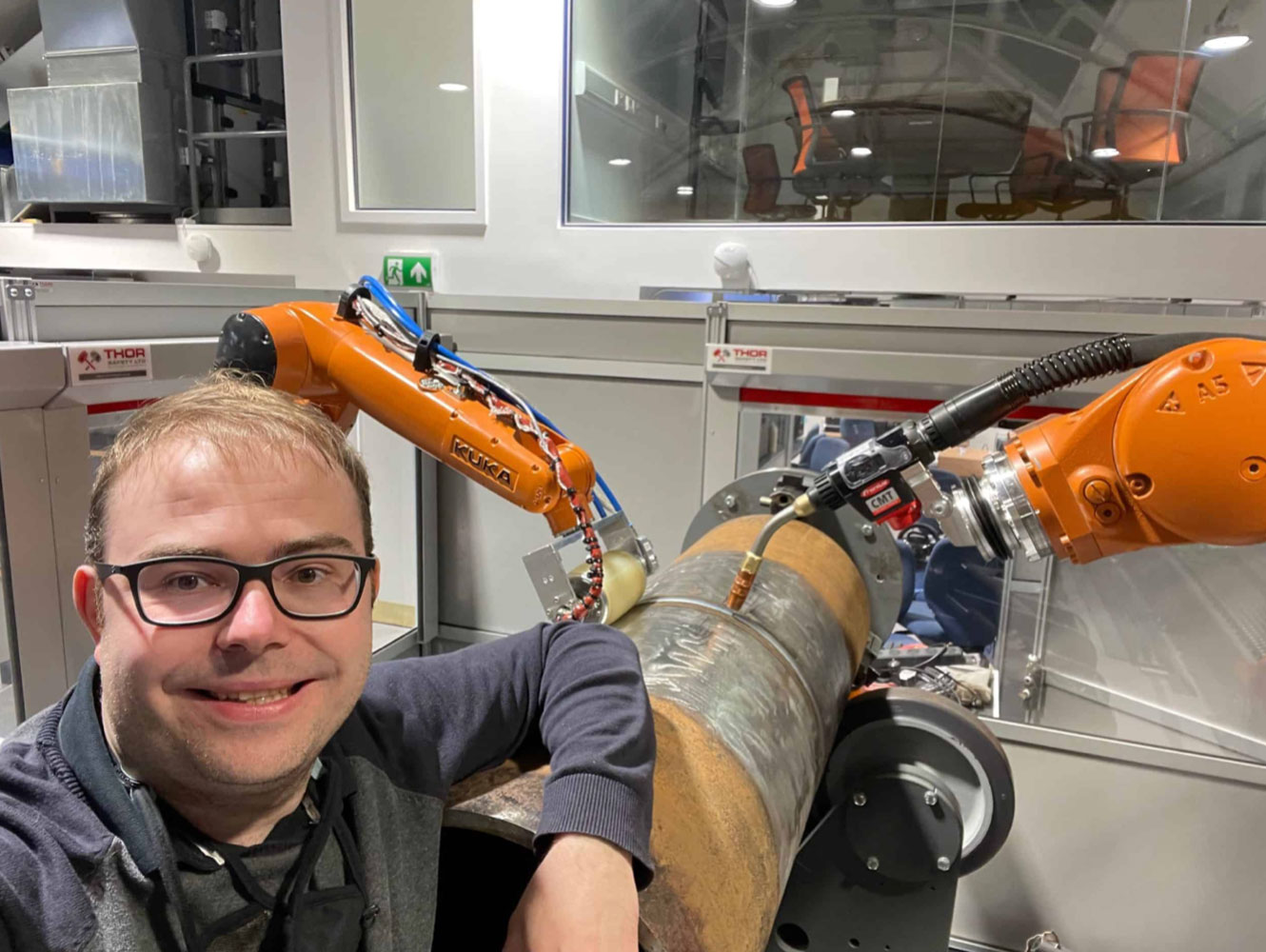
At the heart of the project is the development and deployment of automated in-process ultrasonic inspection for welding and additive manufacturing. Traditionally, welding and inspection are manual, sequential processes. This innovation integrates inspection directly into the welding process, delivering high-integrity structures right, first time, every time.
Key anticipated impacts:
- More than 55% reduction in weld process time
- More than 50% reduction in overall weld cost
- More than 75% reduction in work hours required
Three large-scale, reconfigurable testbeds have been established in Glasgow to trial and refine these innovations in partnership with industry. These testbeds provide a real-world environment for validation, ensuring the developed solutions are immediately applicable across sectors like energy, defence, and shipbuilding.
STEM outreach and workforce development
A critical element of the programme is its investment in education and skills development. With a goal of securing the long-term sustainability of the industry, the initiative has rolled out a suite of training and outreach programmes to engage both current engineers and future talent.
Highlights include:
- 2 Automated Robotics Training Cells designed and built
- 2 In-Process Inspection Training Suites created
- More than 16 engineers from industry partners trained
- 2 PhD@Work placements launched with leading industrial companies
- 8 STEM outreach events, reaching more than 600 schoolchildren across the Glasgow City Region
This comprehensive educational push aims to inspire a new generation of engineers, ensuring Glasgow has the talent pipeline needed to sustain advanced manufacturing growth.
Conclusion
The University of Strathclyde led welding innovation project is more than a technical breakthrough; it is a strategic investment in Glasgow’s industrial future. By fusing heritage with high-tech capability, the initiative is laying the foundation for a resilient, sustainable, and globally competitive manufacturing sector. Through bold innovation, strategic partnerships, and a commitment to skills, Glasgow is reclaiming its place at the forefront of heavy fabrication and contributing to the UK’s journey to net zero.