


The Built4People project, was created as a way of finding ways to retrofit traditional buildings into sustainable, people-centric places while preserving their heritage.
Traditional buildings are an important part of our identity, character and cultural heritage. They are, however, often inefficient, and at risk of the climate emergency. The Built4People project, was created after a call for proposals from Horizon Europe, with Innovate UK supporting the funding application process.
Future-proofing the past
Around a quarter of housing stock in Europe was built before the 1950’s. Many of our buildings are of cultural significance, yet have poor energy performance, are costly to renovate, and are not compatible with current renovation approaches.
A lack of knowledge in both professionals and building owners is leading to unintended consequences, from poor improvements to mould growth. This has created an urgent need for research in improving the energy efficiency and climate resilience of traditional buildings, while maintaining their character and heritage.
The Built4People project is aiming to address this need. An interdisciplinary consortium of organisations, it asks what a good retrofit looks like, and is testing a combination of interventions. Their goal is to provide a catalogue of solutions to thoughtfully renovate traditional buildings that are simple and low-cost to implement, improve air quality and energy bills, and are low-risk to historic features and building fabric.
The project is both theoretical and practical. Activities have been incredibly diverse, including academic research, innovative materials testing, and software development. It has engaged with building users, professionals, designers, policymakers and local authorities to created data-backed KPIs for building retrofit projects.
Energy-efficient Edinburgh
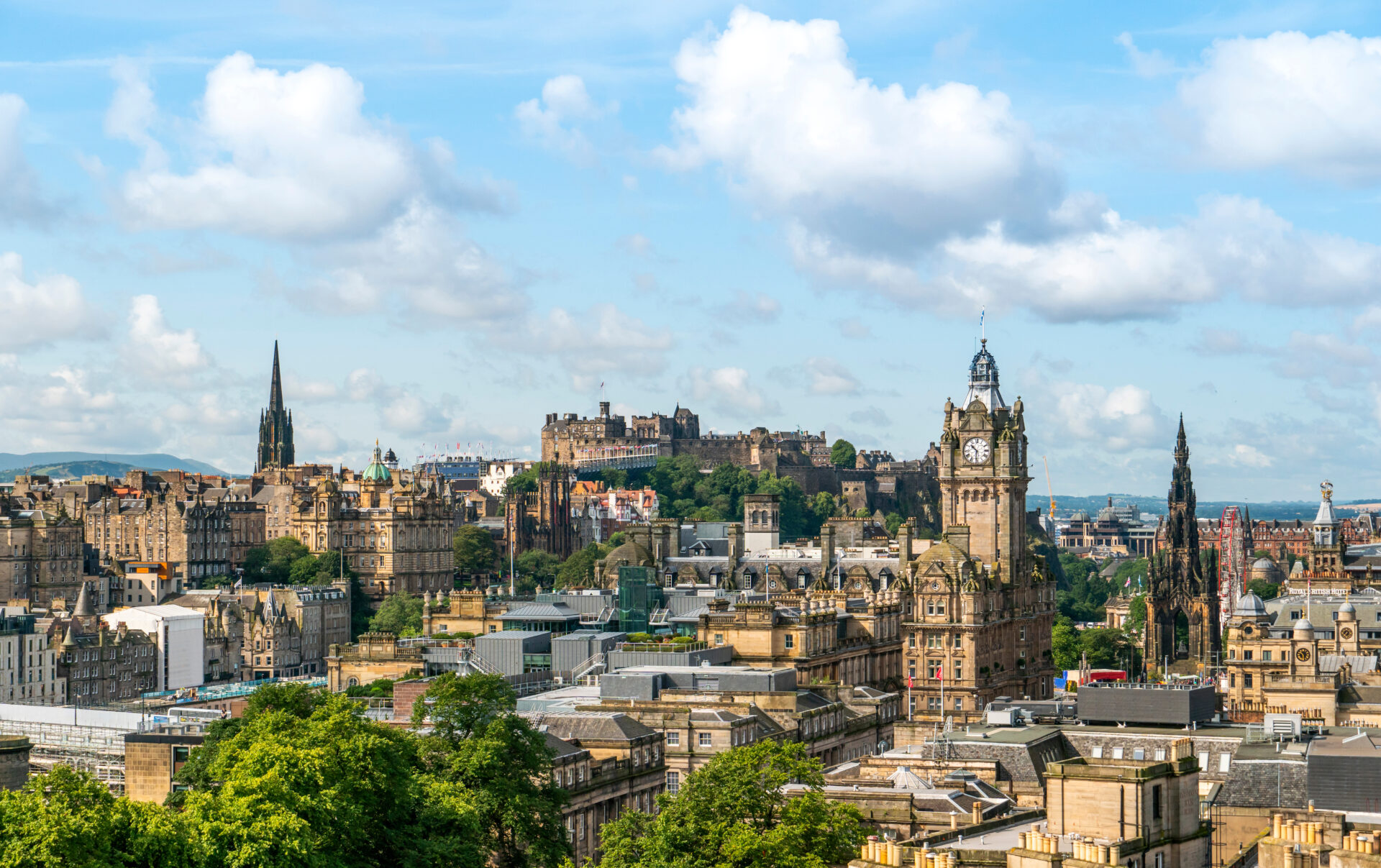
Yann Grandgirard, Head of Climate Change at Edinburgh World Heritage (EWH), is responsible for the development and implementation of the climate-energy programme in the context of Edinburgh’s Old and New Town, a UNESCO World Heritage Site. His team work on innovative pilot projects that find the balance between conservation principles and the need to mitigate the impact of climate change.
Working on the Built4People project has allowed EWH’s climate team to consider issues relevant to Edinburgh – yet replicable elsewhere – in a people-centric way. For example, they have been collaborating with the University of Strathclyde and a German joiner on finding a low-cost way to improve the energy efficiency and air quality of historic windows, while maintaining the original glass and fabric.
The team came to the project from a 2023 call for proposals from the Horizon Europe programme, addressing the need to decarbonise and retrofit historic buildings. It aimed to accelerate and enable energy retrofit projects that would reduce energy consumption in pre-1945 buildings by 60%, targeting at least 1% of the building typologies in a specific country.
This perfectly aligned with the EWP’s climate team’s ambitions. They contacted researchers in Italy to join their project and lead the consortium. This has led to a 4-year project with 18 organisations involved from various backgrounds – academia, research institutes, architects, SMEs, NGOs, local councils, and the Church of Sweden – in multiple countries. Three are in the UK: EWH, the University of Strathclyde, and INTBAU, who promote traditional building skills.
The UK National Contact Point at Innovate UK really helped us and gave us the reassurance to apply. That was a game changer
Yann Grandgirard, Head of Climate Change, Edinburgh World Heritage (EWH)
EWH received support from a UK Horizon Europe National Contact Point (NCP) via Innovate UK to assist with preparation, which can be complex and admin-heavy. The NCP helped with the strategic aspects of the application, answered questions and reassured the team on what can be a daunting process for newcomers. Yann described this as a game-changer, and that without that support they may not have applied.
Innovate UK’s support enabled EWH to take on a project that would have otherwise been too high-risk for a small team. Thanks to funding from working on a Horizon Europe project that covered staff and capital costs, and exposure to knowledge through expert partners and previously unavailable data, the team have been able to deep-dive into problems.
Tools for tomorrow
The potential from the project is huge. Findings from one building in Edinburgh, for example, could be replicated in similar traditional buildings through the UK.
Knowledge gained is planned to be disseminated via training programmes, including an e-learning course and a summer school in Poland. Resources are being gathered to create an online toolkit advising on what retrofitters should (and shouldn’t) change with a package of interventions tailored to different building typologies.
For EWH, the solutions, guidance and tools from the Built4People project have given them a clear roadmap for future retrofits across the city, including the project’s typology-led approach.
The climate team have been able to commission more studies locally to both support the project and their longer-term work. Working on an international project of this scale has also helped to raise their profile and facilitate future opportunities. More people now come to them as subject experts.
We’ve got a lot of ideas, but it’s always tough getting funding to get these ideas done
Yann Grandgirard, Head of Climate Change, EWH
Yann’s advice for smaller organisations is to not be afraid to apply for projects like this one. While there’s always a risk, this can be mitigated with knowledge, planning, and most importantly, the right partners. Working with people who are familiar with the world of European projects and grant management can allow you to work on what matters most.