


The Next Generation Remote-Sensing Technologies project is accelerating the development of high-performance sensing and imaging solutions for applications across defence, healthcare, energy and security.
The Next Generation Remote-Sensing Technologies project has positioned Glasgow at the forefront of high-performance sensing and imaging solutions. Through collaborative innovation and advanced electro-optic sensor development, the project is enabling breakthroughs across defence, healthcare, energy and security applications.
Led by Thales UK Ltd with the University of Glasgow as its academic partner and working with Sentinel Ltd and Kelvin Nanotechnologies (KNT) Ltd, the £2.3 million Next Generation Remote-Sensing Technologies project has developed cutting-edge Next Generation capabilities in:
- Laser event sensors
- Uncooled infrared detectors
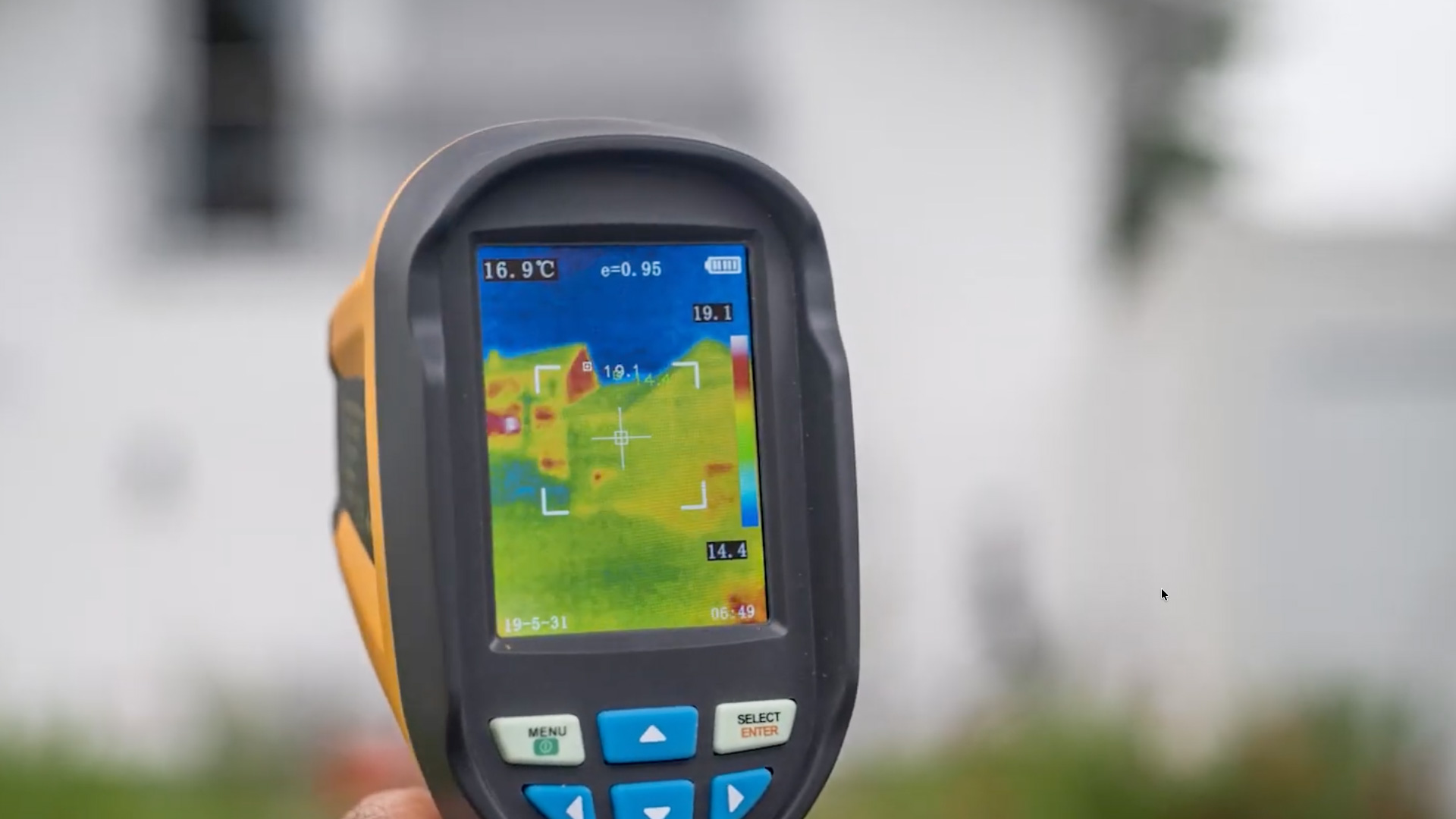
- Edge-processed high-definition thermal imagers
With strong commercial potential in both UK and international markets, estimated at £160 million over the next decade, the project is accelerating technology from concept to prototype and setting the stage for future deployment in critical sectors.
The initiative has advanced next-generation sensors that can be integrated into defence, security, and industrial systems, improving situational awareness, platform survivability, and environmental monitoring in a cost-effective and scalable way.
Inspiration
Emerging threats and rapidly evolving technologies are driving demand for new sensor systems that are:
- Compact and low-cost for scalable deployment
- Highly accurate and specific, providing resilient detection across a range of wavelengths and modulation schemes
- Capable of operating in complex or contested environments for applications such as industrial process control for civilian airspace or on the battlefield
The project addressed critical sensing gaps, particularly in laser detection, infrared imaging, and edge-processing for enhanced data interpretation – all with direct relevance to national defence, medical diagnostics, energy efficiency, and public safety.
By investigating multiple sensor technologies within a unified delivery project, it built a new generation of remote sensing solutions that are more adaptable, affordable, and market-ready.
Innovation and impact
The project has focused on rapid prototyping, integration, and testing, advancing novel sensor designs from concept to field-tested prototypes. Each part of the project delivered on key the outcomes outlined below.
Next Generation Laser Detectors
Key Achievements:
- Feasibility study which validated the optimal sensor approach (linear photodiode arrays) and ruling out less viable options (cameras) and to understand the requirements for land and air platforms, in collaboration with Thales UK
- A laser warner prototype was designed and manufactured by Sentinel
- High angular accuracy was achieved using linear photodiode arrays
- Employing uncooled IR detectors for threat sensing
- Prototype performance was tested by Thales UK laboratory based performance testing of the Sentinel laser detector prototype where all laser waveforms were detected. A critical milestone for future adoption by UK defence and security agencies
- 2.5 FTE jobs created at Sentinel and expanding the high-tech R&D capability and knowhow at Thales Glasgow
This part of the project has fostered a deep partnership between Sentinel and Thales UK. Sentinel led the development of the internal sensor units—including electronics, mechanical design, software, and optics. Thales UK focused on system integration and platform-level deployment, supporting defence applications.
Next Generation Uncooled Infrared Detectors
Key Achievements:
- Transferred fabrication process from chip-scale to wafer scale
- Developed prototype mid-wave infrared camera for field experiments in collaboration with Kelvin Nanotechnologies (KNT) Ltd
- Undertook preliminary testing in collaboration with Thales showed potential for future development
- Job creation and upskilling in Glasgow’s technology and innovation sector, by hiring 7 post-doctoral researchers and relying on local supply chain (III-V Epi Ltd, Gas Sensing Solutions Ltd, WideBlue Ltd)
The collaboration has created a strong foundation for ongoing product development and commercialisation—offering long-term value to both the UK Ministry of Defence and global markets.
Next generation Edge-processed High-Definition (HD) Thermal Imagers
Key Achievements:
- Development of a novel HD Camera architecture for future product line (Land & Naval)
- HD detector and future evolutions identified, for optimum size/weight/power
- HD video chain developed for outstanding image quality with low latency
- Far edge AI processing architecture developed using FPGA resources for SWaP
- Key physical and functional architecture defined, with lab-based video demonstrator created
- This work has contributed to the creation of 4 new posts at Thales Glasgow
Market potential and applications
The sensor technologies developed have broad application potential across:
- Military and Defence: Laser warning, platform survivability, battlefield situational awareness
- Security and Policing: Laser dazzle detection, surveillance systems, critical infrastructure protection
- Healthcare: Non-invasive diagnostics using infrared sensing
- Energy and Net-Zero: Monitoring emissions and efficiency in complex systems
- Aviation: Enhanced pilot safety from civilian laser interference
With an estimated UK market value of £40 million and export potential of £120 million, the project is primed to deliver substantial economic returns.
Regional and national impact
This accelerated research programme is enhancing Scotland’s innovation ecosystem by:
- Supporting job creation and upskilling in Glasgow’s technology sector
- Strengthening supply chains and industry-academia collaboration
- Contributing to UK strategic objectives in defence, innovation, and export growth
The partnership model and advanced sensing platform developed through this initiative can serve as a blueprint for future innovation across multiple sectors.
Conclusion
The Next Generation Remote-Sensing Technologies project has helped pioneer the future of sensing, combining academic research with industrial integration to deliver world-class innovations.
By developing advanced, cost-effective sensors for critical applications, the initiative is securing a strategic advantage for the UK in global defence and security markets.
Through collaboration, rapid prototyping, and clear commercial focus, the project is not only building advanced technologies but also creating a sustainable innovation pipeline for future breakthroughs.