

Global Climate-Smart Agriculture Conference
Discover our key insights gained from the Global Climate-smart Agriculture Conference 2025 in Brasília.
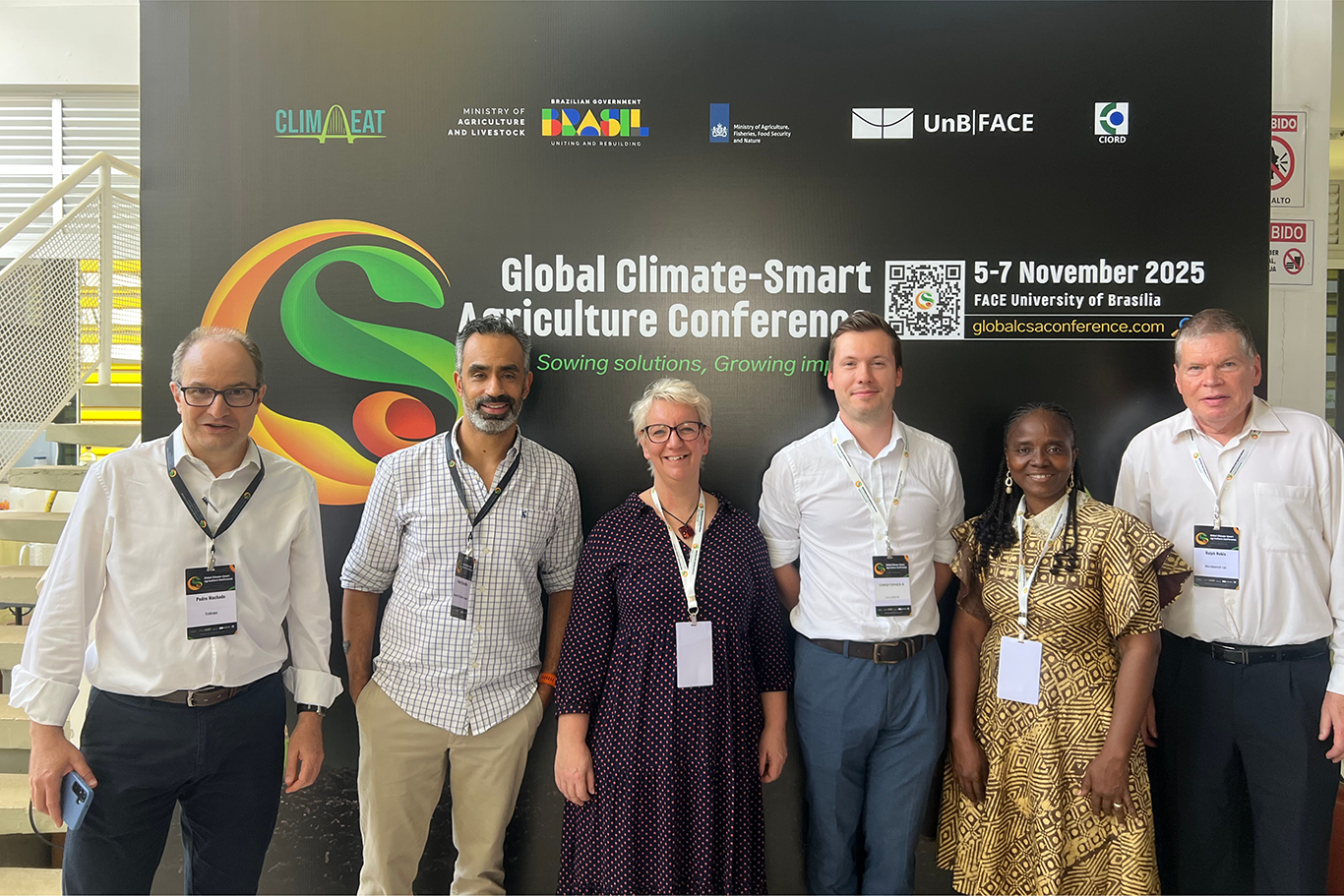
Last month, we attended the Global Climate-smart Agriculture Conference 2025 in Brasília showcasing the Innovate UK Climate-Smart Agriculture Partnership: UK–Brazil–Africa programme.
The conference brought together diverse international stakeholders to discuss the future of food systems, climate resilience, and agricultural innovation.
Our event insights
Inclusive, science-based policy is needed to move global food and climate systems from extractive to regenerative models and redistribute power.
There was consensus that farmers, particularly smallholders, remain under-represented in decision-making, and that genuine progress will require coordinated approaches and policies that reward environmental stewardship.
Climate-smart agriculture and regenerative agriculture approaches require system-level thinking, not just technological fixes.
The distinction between climate-smart and regenerative agriculture was debated during the conference. Climate-smart agriculture is often framed around adaptation, mitigation, and sustainability. Regenerative agriculture goes further, aiming to restore soil and ecosystem health. Key to both approaches, was that these need to be tailored to local contexts and farmer needs.
Equitable access to innovation is crucial for improved livelihoods and sustainable food systems.
Despite momentum in research, and the development of new technologies, barriers continue to limit access and scale-up of innovations. These include, fragmented regulations, limited farmer involvement, and the ongoing challenge of harmonising global and local priorities. To promote greater equity, participants proposed targeted adjustments to intellectual property systems, and new incentive structures to reward the application of climate-smart practices or the development of climate-resilient crops.
Throughout the event, a range of innovations were showcased: digital technologies such as mobile apps, virtual fencing, and satellite-based Earth observation tools for monitoring and decision-making support. Participants highlighted regenerative approaches in root crops, integrated crop–livestock–forest systems, and push–pull farming innovations. Soil health, microbial and carbon sequestration research was also emphasised.
Collaboration across agribusiness, cooperatives, and global food companies is essential to scale up innovations.
Collaboration across countries and partners is needed to get innovations into the hands of global farmers. The private sector and finance panels highlighted the importance of traceability, supply chain decarbonisation, and investment in regenerative agriculture. The launch of new accelerators and investment programmes, such as the Global Methane Hub to fast-track research and development on Low-emission Rice, signals a commitment to collaboratively scaling solutions.
Metrics to track the outcomes of climate-smart agriculture need to be aligned across businesses, civil society, producers, and financial institutions to support better decision making.
Challenges persist in tracking outcomes, including the high cost of primary data, fragmented infrastructure, and the misalignment of monitoring tools with tropical ecosystems.
Robust, scalable and harmonised Measurement, Reporting & Verification (MRV) approaches to credibly measure impact, inform strategic decision-making and unlock finance to accelerate action and outcomes on the ground are needed. Without harmonisation, meaningful impact assessment is undermined, creating uncertainty for businesses, investors, and other stakeholders.
We must learn from failure to increase the impact of innovations and improve global food systems.
Sessions on risk simulation and controlled failure underscored the importance of systems that support experimentation and learning, rather than penalising setbacks.
Further reading
The Global Climate-Smart Agriculture Conference team have released the following Global Climate-Smart Agriculture Conference Outcome Document with a detailed breakdown of all the key discussion points from the entire event.
Innovate UK was joined by several innovation award winners who all received funding through the trilateral partnerships to drive innovation in climate-smart agriculture for their innovations. These projects included:
- Valorising agro-industry by-products into mushroom substrates and then soil amendments in tropical circular economies
- SporeSmart: Climate-smart surveillance and sustainable management of fusarium diseases in staple crops
- Banalytic: Early warning system to combat black sigatoka in banana plantations
- Dynamic realtime monitoring, reporting and verification system for enabling climate-smart agricultural practices across Africa (CarbonXtras)
Connect with us
Join the Innovate UK Climate-Smart Agriculture Partnership: UK-Brazil-Africa LinkedIn group to connect with others.

Related programme

Climate-Smart Agriculture Partnership
Innovate UK Climate-Smart Agriculture Partnership: UK-Brazil-Africa brings together innovative people and organisations to promote climate-smart agriculture in Africa.